
haiku tsurezure
haiku tsurezure - #32
Snapshots from India
Geethanjali Rajan (Chennai, India)
Haiku from Metropolises in India
I often hear from poets that when they are surrounded by pristine nature, it is simpler for them to connect to the environment and compose haiku. This is perhaps, due to the state of mind of the observer, as well as the surrounding environment which encourages poetry. What about city dwellers? Some of the bigger metropolises in India have some patches of greenery, parks and open spaces but many others do not have that luxury. Where do poets then find inspiration for haiku in the hustle and bustle of urban life? What is the subject of their haiku? This time, I would like to introduce a few haiku that have been written by poets living in the large metropolises of India.
most expensive high rise
the moon Rohini Gupta, Mumbai
(Where Rivers Meet)
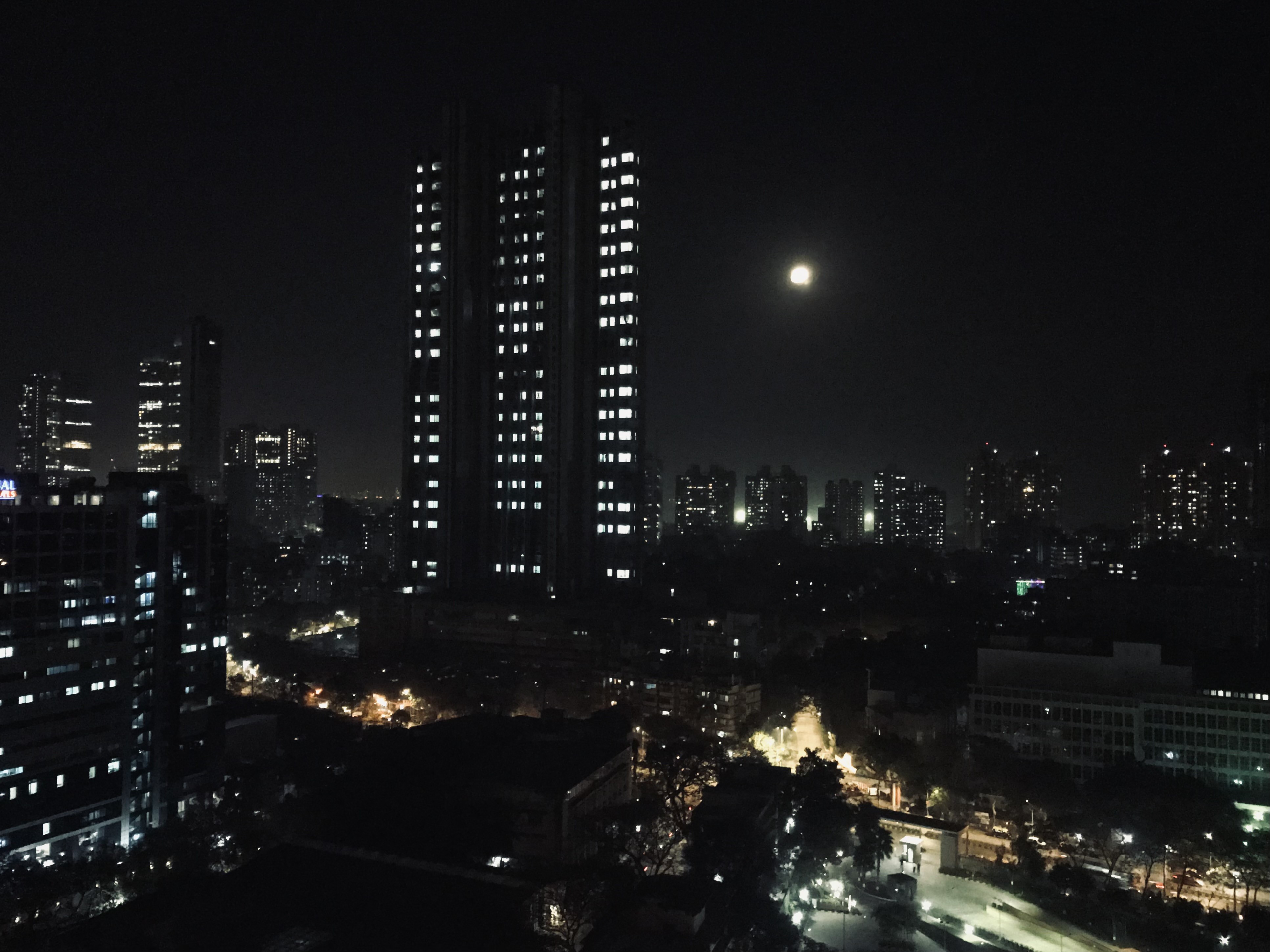 Photo: Geethanjali Rajan
a million stars
switch on Raamesh Gowri Raghavan, Mumbai
(Whispers – Karen O'Leary's Blog)
I begin the commute
all anew Raamesh Gowri Raghavan, Mumbai
(https://www.joaoroqueliteraryjournal.com/poetry/2019/6/29/three-haibun-the-bus-to-nuwara-eliya)
Both Rohini Gupta and Raamesh Gowri Raghavan live in Mumbai (population of over 18 million in the last census), the financial capital and largest metropolis of India. It is a city of high-rise buildings, heavy traffic, and long daily commutes to work by crowded electric trains or taxis. Both poets have reflected on the city, as well as the truth of their daily lives through haiku. Their observation and experience of nature is well contrasted with the drudgery of the commute or the concrete jungle that the city is.
Dr Brijesh Raj too lives in Mumbai and being a veterinarian, has plenty of inspiration from the lives that he touches every day. Here however, is a haiku from his commute.
a myna chirrups
at the sprinklers Dr. Brijesh Raj, Mumbai
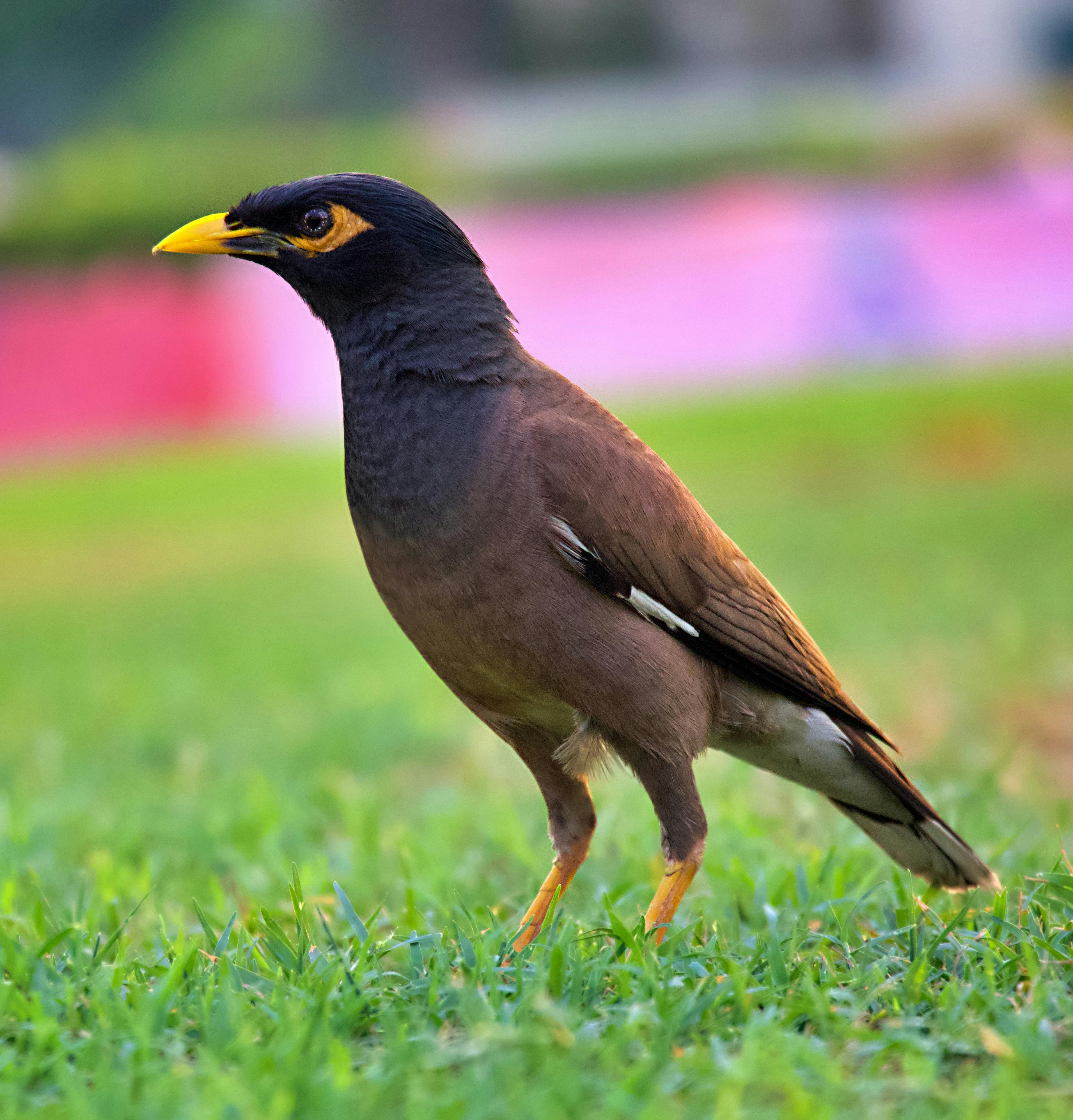 Photo: Manu Mohan (pexels.com)
K. Ramesh lives in Chennai (population of around 9 million in the last census), a metropolis in South India, which is by the Bay of Bengal. It is hot most of the year and the city finds solace in the sea breeze that cools the place down in the evenings. In his haiku, he captures the beautiful red moon and the breeze as well, from his balcony.
a full red moon
between the apartments K. Ramesh, Chennai
(a small tree of tender leaves, 2020)
so many mouths open
for the puffed rice K. Ramesh, Chennai
(a small tree of tender leaves, 2020)
Being a city of many temples, there are ponds within the city that support the activities of the temples. Larger temples have a pond attached to and maintained by the temple. In earlier days, the temple ponds were used by devotees for purification and bathing before entering the temple. Many temples also have annual festivals and celebrations that involve taking the deity into or around the pond.
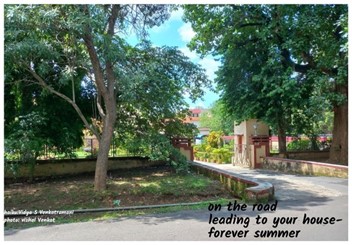
Vidya S Venkatramani takes a stroll in the park near her home or in her garden. Generally crowded, a quiet moment is what has inspired her photo haiku.
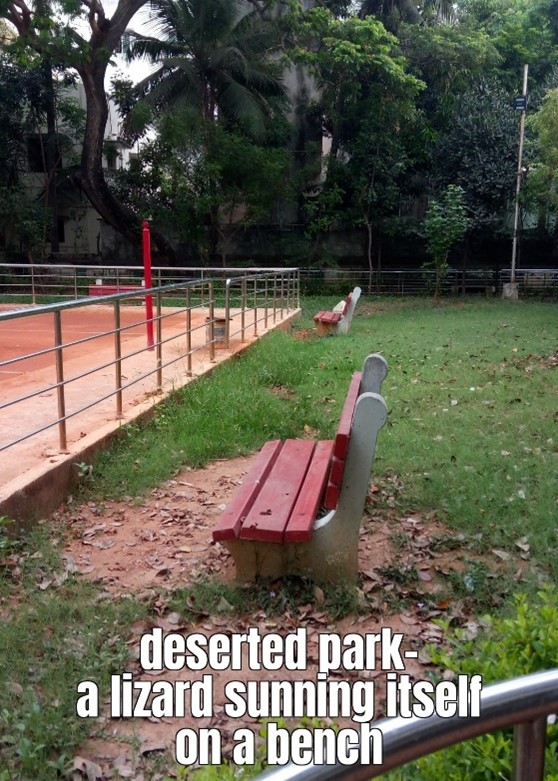 Photo and haiku: Vidya S Venkatramani
Minal Sarosh, who lives in Ahmedabad (population of over 6 million in the last census), observes the flow of traffic on the roads and yet, finds her haiku moments within the city.
the yellow hoods of rickshaws
moving fast Minal Sarosh, Ahmedabad
(Enchanted Garden Haiku Journal, Issue 4)
the crow and the statue
sharing time Minal Sarosh, Ahmedabad
(Poetry Pea Podcast, S4E16)
What is interesting in most of these haiku is that despite the fast pace of daily life, the pressures of work, and the crowded and often polluted environments that cities have become, inspiration is still everywhere. One has to only look and tune in, to find quieter moments to pen haiku. What is also observed in these poems is the juxtaposition of the elements of nature with the life, environment and substances created by man. While many poems do not have clearly delineated seasons, most of these haiku have a focus on nature (a genre of English language haiku outside of Japan).
My own good fortune lies in the old garden where parrots and Asian Koels rub shoulders with the striped Indian squirrel on the mango tree.
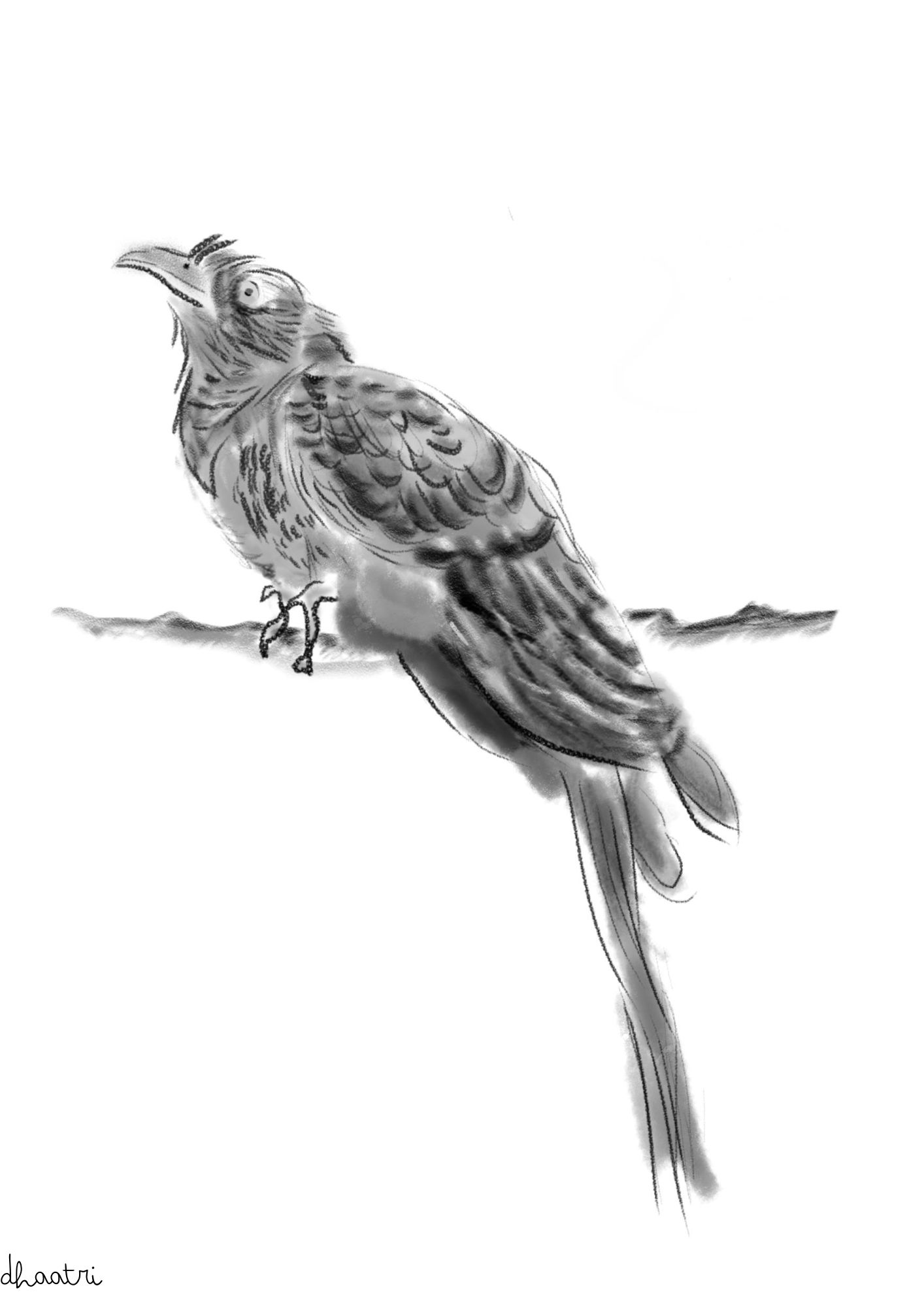 Illustration: Dhaatri Vengunad
many songs
from the Asian Koel Geethanjali Rajan, Chennai
(Icebox – August 2022)
Urbanisation is the direction we have taken and vanishing open spaces have become a reality. Fortunately, more voices in India are joining in to campaign for greenery and parks in cities. A case for more haiku poets and poetry!
Geethanjali Rajanhails from Kerala, South India, and teaches English and Japanese in Chennai. Her journey with haiku started around the year 2003. She edits haiku at the online journal cattails. She loves learning about Japan. An e-book of haikai collaborative poetry, Unexpected Gift, with Sonam Chhoki (Bhutan) was published in 2021. Author of longing for sun longing for rain, Red River, 2023.